We have been learning about and experiencing Easter traditions in Ukraine. I have included here much information and pictures I have copied from online sources too numerous to mention. We were excited when we were passing by the Orthodox Church on our way to our own church services in Chernigov on the Sunday before Easter. We had known that Palm Sunday was celebrated in Slavic countries with pussywillows. Here we saw them being sold! Members of the congregation, too numerous to all go inside, were standing outside to listen. In the Orthodox church there are no benches; people stand for the services.


Springtime rituals were already well established by the time Prince Vladimir turned the Kievan Rus into a Christian state in 988. Pagan Ukrainians had been welcoming spring with dancing, fires, painted eggs, and other rituals for centuries. Some of these annual practices were absorbed into Christian Easter rites but maintained their roots in the peasants’ eyes as important springtime traditions. For example, the cutting of pussywillow branches was not originally a Christian substitute for palm branches. Since pagan times, the pussywillow’s bloom was seen as a signpost for spring and was thought to have healthful qualities if ingested. Pagan Ukrainians would cut the branches and swat one another with them to bless each other with the pussywillow’s strength to come out of winter so early in the year. When Palm Sunday began to be celebrated, the two practices merged into one.
We bought some souvenir plastic Easter eggs and hung them on some branches that we brought inside on our general conference Sunday. The branches sprouted and it looked like this. Though we bought these hanging eggs, Ukrainians don't use them! They are just souvenirs that someone like me could use this way. I thought is was fun; a Ukrainian looked at me funny when I asked them about what they would use them for. They wouldn't buy them!

The next year we also decorated branches with our grandchildren who were visiting. We also bought a bunch of pussy will and birch twigs at the time of Palm Sunday. Here is a picture of them both.

We bought some souvenir plastic Easter eggs and hung them on some branches that we brought inside on our general conference Sunday. The branches sprouted and it looked like this. Though we bought these hanging eggs, Ukrainians don't use them! They are just souvenirs that someone like me could use this way. I thought is was fun; a Ukrainian looked at me funny when I asked them about what they would use them for. They wouldn't buy them!


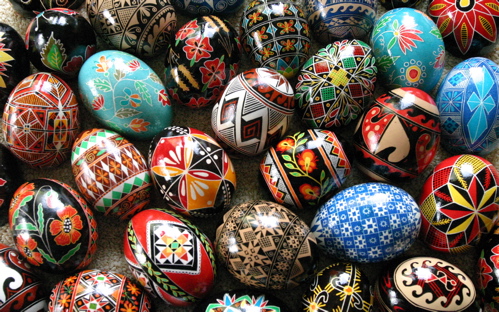
Easter eggs are an important part of the Eastern European Easter tradition. Eggs, symbols of fertility, springtime, renewal, life, good luck, eternity, and rebirth have been given as gifts and used in springtime rites for centuries in Eastern European countries so they are really holdovers from a pagan tradition. Ukrainian Eggs (Pysanky) are famed the world over for their intricate designs, bold colors, and the skill it takes to draw precisely on a curved surface using a wax-resist method. While other Eastern European countries paint eggs for Easter, Ukraine is the most famous for this practice. These eggs are not hard-boiled but are usually "blown out" after painting.
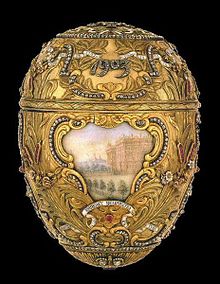
The Faberge egg tradition began in Tsarist Russia. These highly-prized and priceless art objects were the Easter eggs of royalty. Fabergé eggs were commissioned by Czar Alexander III of Russia as an Easter surprise for his wife. They are not Ukrainian!
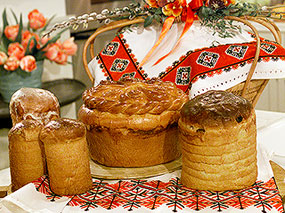
On Friday we went to the store to get groceries and also wanted to get some Ukrainian Easter bread. It turns out it was precisely the right day because Friday is the day most housewives (and stores) bake this bread. We found shelves of the fresh Easter bread available.

We bought two and started eating the smaller one. Recipes online are of a slightly sweet yeast-rising dough with eggs and perhaps some cardamon, raisins and almonds. The top is decorated with cut dough shapes or white frosting. It tasted to me like my hot cross buns!

The Easter basket is prepared for Sunday morning. It includes the Easter bread, eggs--both the pysanky decorated ones, and hard-boiled ones just dyed--usually red to represent the blood of Christ, The hard shell can symbolize the sealed tomb of Christ so the cracking of it symbolizes Christ's resurrection from the dead. Other foods such as cheese, butter, salt, pork fat, horse radish, ham, sausages, as well as various seeds were also brought to church for the blessing.

We saw people on the subway Sunday morning with their Easter baskets. I don't know if they were on their way to or from the church at that hour (8a) When we arrived in Chernigov after 10a, there were only a few people in the area of the Orthodox church. The church doors were open, but only lit candles were inside.

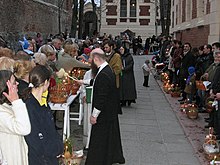
The Resurrection Mass in olden times a was held in the early morning before the rising of the sun. At that time in history all churches in Ukraine were built to face the East. When the Mass was ending and the priest first said "Chrystos Voskres" (Christ Has Risen). Following the Mass the people greeted each other in the traditional way, by kissing each other three times. Sometimes there would be a procession around the church three times. The people would then stand outside the church with their baskets filled with the food which they had prepared for the blessing ceremony. A lit candle was always placed in the baskets which were decorated with aromatic herbs and periwinkle. Immediately after the ceremony the family would hurry home to share the blessed paska and thus begin Easter breakfast. On our way back from Chernigov we saw many people outside enjoying a picnic on a beautiful Spring day. I imagined they were enjoying the contents of their Easter baskets! Most stores were closed and few people were on the streets. It truly seemed like families were celebrating a holy day.
During the Easter season the dead are remembered on Maundy Thursday (before Easter) and also during the whole week after Easter, especially on the first Sunday following Easter Sunday. People gather in the cemetery, bringing with them a dish containing some food and liquor or wine, which they consume, leaving the rest at the graves. This tradition is still very alive in Ukraine and cemeteries have built-in tables and benches around the tombs for this important moment. People usually come and clean the tomb area, then celebrate with eating and drinking; they will then leave on the tomb some food and drink even unopened. It is part of the Ukrainian tradition as well that the poor people are allowed to come later in the cemeteries late in the evening in order to retrieve the food that has been left for them intentionally. People also can leave lit candles on graves. There are enclosed votive-type candles that can be bought which would be safe and shielded from wind. (See stacks of these colored cylinders behind the baskets and in front of the flowers in the grocery store photo above)


This seems like a wonderful time to do the Spring cleaning of cemetery plots and then remember the overarching blessings of Easter. During the Easter season, when you meet people you say "Christ is risen" and the reply should be "Truly risen". That knowledge is in our hearts and central to all we are doing here in Ukraine. All people will be resurrected and live forever. But also because of Christ's atonement, we can be forgiven of our sins and may be helped to follow His Gospel in serving and loving those around us. And we may prepare ourselves to live together with family members and with our Heavenly Father and His beloved Son, Jesus Christ.
