Thursday, November 18, 2010

The Way To Cherkasy

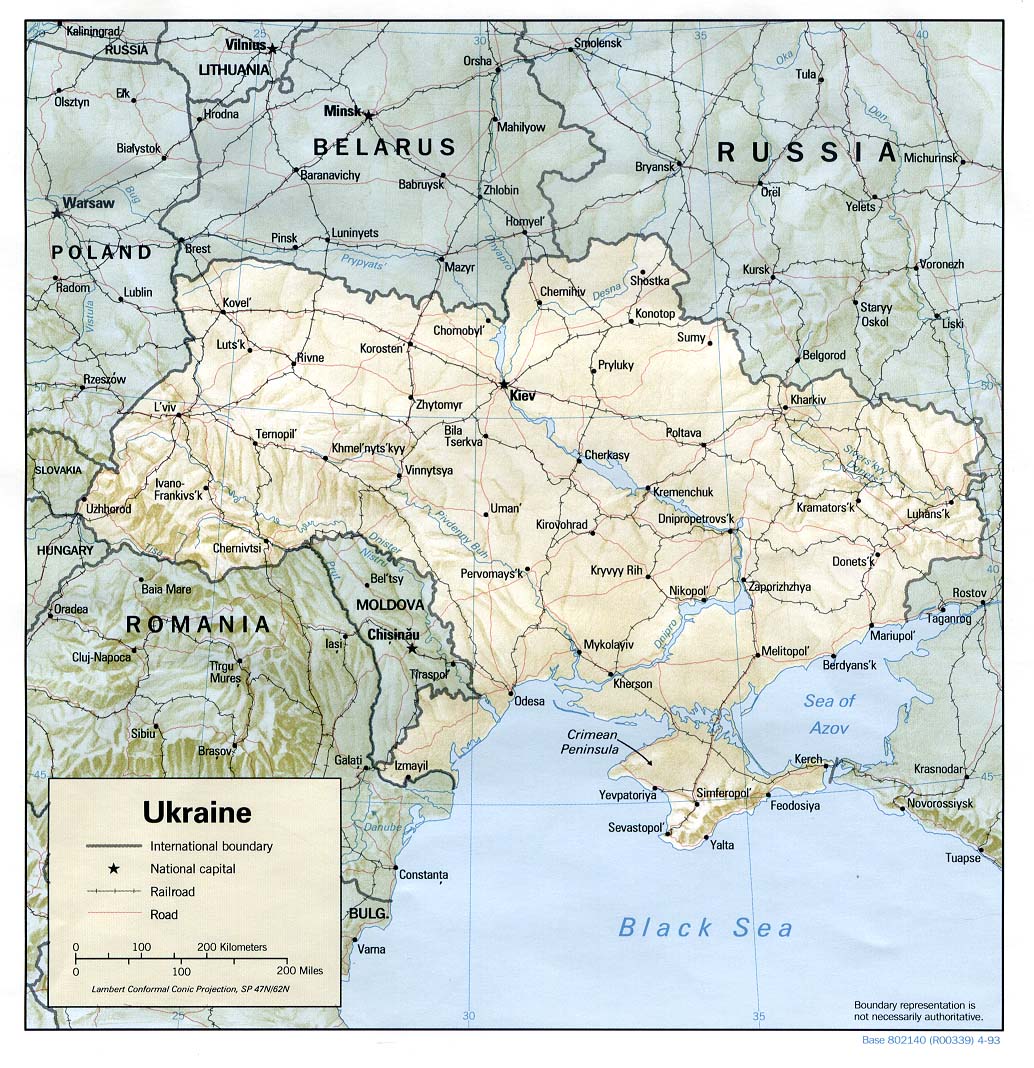
On a beautiful Sunday, Nov. 14, we traveled with Brother Poddubnyy, a temple worker, counselor in the mission presidency, and CES supervisor, to visit the LDS branch in Cherkasy.  Traveling east and south we passed through farm fields, many very green with growing winter wheat since we had been having unusually mild temperatures all week long.  Sugar beets are also a main crop in this area of Ukraine


This area of Ukraine was the home of Sholem Aleichem (1859-1916), author of the story from which "Fiddler on the Roof" was created.  Until he was 13 he lived in a small Jewish settlement (which probably doesn't exist anymore--60,000 villages were destroyed on the Eastern Front during the fighting in WWII) and then the family moved to a town in this area.  As we travel through the rural Ukrainian villages we often think of fictional Anatevka  


The Cherkasy Branch meets in this building constructed by the Church and attached to the adjoining apartment building.  Just a block off of the main street, the corner is landscaped for pedestrians.  It is spacious with a large meeting area, many classrooms and offices and well suited to the small congregation.  There are 200 members and about 60 were in attendance.  We see many in the temple often.  They are wonderful people.
Cherkasy sits at the end of the largest reservoir on the Dneiper River.  It was founded in the 14th century and home to Ukrainian Cossaks who ruled the area.  This was our view as we traveled back across the causeway in the evening after passing some time walking in the city while Bro. P. took care of his church business.  It was a 3 1/2 hour drive from Kyiv. 

Ukraine Map for Your Reference

Saturday, November 6, 2010

Where in the World is Ulan-Ude?

Russia Map
This week at the temple we had members from the Novosibirsk mission area.  The group included some from Krasnoyarsk, Irkutsk, and Ulan Ude as well as Novosibirsk. FYI: The Novosibirsk area is 6 time zones away from Kyiv!
 Some flew from Novosibirsk to Moscow and then took an overnight train to Kyiv.  Those from further east took trains to Krasnoyarsk, then a plane to St. Petersburg and one to Kyiv (this was the cheapest way)!  In the past the temple trips were to Sweden and later to Finland.  The reason they now come to Kyiv is not just distance, but that no visas are needed to exit Russia or enter another country and that was often a major obstacle.  It is also only a 3 hour plane trip to Kyiv and was an 8 hour bus ride to Helsinki.  Besides, they are in the Kyiv temple district (and probably for all of those reasons).  

So where is Ulan-Ude?  It is on the south east side of Lake Baikal.  One family who joined the church there in 2006 after attending English classes offered by the missionaries, was sealed together this week.  The daughter served a mission in Vladivostok, the son in Samara.  They all came and the two returned missionaries were delightful temple workers with us.  Their mother was endowed and along with the deceased father all were sealed.  This family looks oriental/mongolian.  They are the nicest people.  They said their church branch had about 70 active members.  We will miss them and hope for the best.  

Thursday, November 4, 2010

The Ukraine Famine of 1932-33

Also along the Pechersky Hills is a memorial to the Ukrainian "Holodomor  "Encyclopædia Britannica. Quote: "The Great Famine (Holodomor) of 1932–33—a man-made demographic catastrophe unprecedented in peacetime. Of the estimated six to eight million people who died in the Soviet Union, about four to five million were Ukrainians... Its deliberate nature is underscored by the fact that no physical basis for famine existed in Ukraine... Soviet authorities set requisition quotas for Ukraine at an impossibly high level. Brigades of special agents were dispatched to Ukraine to assist in procurement, and homes were routinely searched and foodstuffs confiscated... The rural population was left with insufficient food to feed itself."  One walks down the stairs (invisible in the black area) to a display underground of those who lost their lives. 
This statue tells the story best.  The little starving girl has 5 stalks of wheat in her hand.  Anyone who had even scavenged 5 food items was considered an enemy of the state and could be exterminated.   The Ukrainian population could not openly talk about this event until after they became a free country. 

These storks rising seem a fitting representation of the modern Ukrainian people and nation who are rising with strength and vigor from past oppression.

Kyiv's Motherland Statue

As well known and visible in Ukraine as the Statue of Liberty (46 meters high) in the USA, the Motherland Statue (62 meters high) stands on a hill overlooking the Dneiper River and not far from the Lavre Monastery we visited on another day.  It was a gift from Russia (the Soviet symbol is on the shield) in tribute to Ukrainians who fought against the invading Nazis. It was dedicated by Brezhnev (also a Ukrainian) in 1981.  The plaza surrounding the statue has war machines and memorials depicting courageous civilians and soldiers.  In the base of the statue is the Ukrainian State Museum of the Great Patriotic War with very impressive displays about the Eastern Front of World War II.  The damage inflicted by invading Nazis with the battles for cities and lands throughout the former Soviet Union, and in particular the Ukraine, is very well presented and sobering. The last display is a large long table set on one side for military personnel with displays behind of many soldiers who lost their lives, on the other side for civilians with displays of families' losses.  It is estimated that more than 60 million people lost their lives because of WWII.

Wednesday, October 27, 2010

Faith Reborn: the Saints in Ukraine

For those of you who didn't get to see this program about the Kyiv saints and the temple, shown on BYU TV and in stake centers between the October 2010 General Conference sessions, here is a link to it that you can use.  It is very interesting and we love it because we know many of those who are interviewed or shown.
http://www.byutv.org/watch/2037-100

Monday, October 11, 2010

Shopping at the Market/Reenok

 Outdoor markets are found everywhere.  People just set themselves up anywhere there is traffic to sell their wares.  We are told that there is no necessity for a license or permission of any kind as long as the selling place s not permanent.
Some markets are semi-permanent with such booths that probably are rented.  We frequent these open booths where produce is sold  We also like to just walk around and see what is for sale, how the wares change as the seasons do.